
Carpet Tile Delivery Inspection & Site Storage Checklist
A practical receiving-to-release workflow for flooring importers, distributors, contractors and project teams—before cartons are handed to the installer.
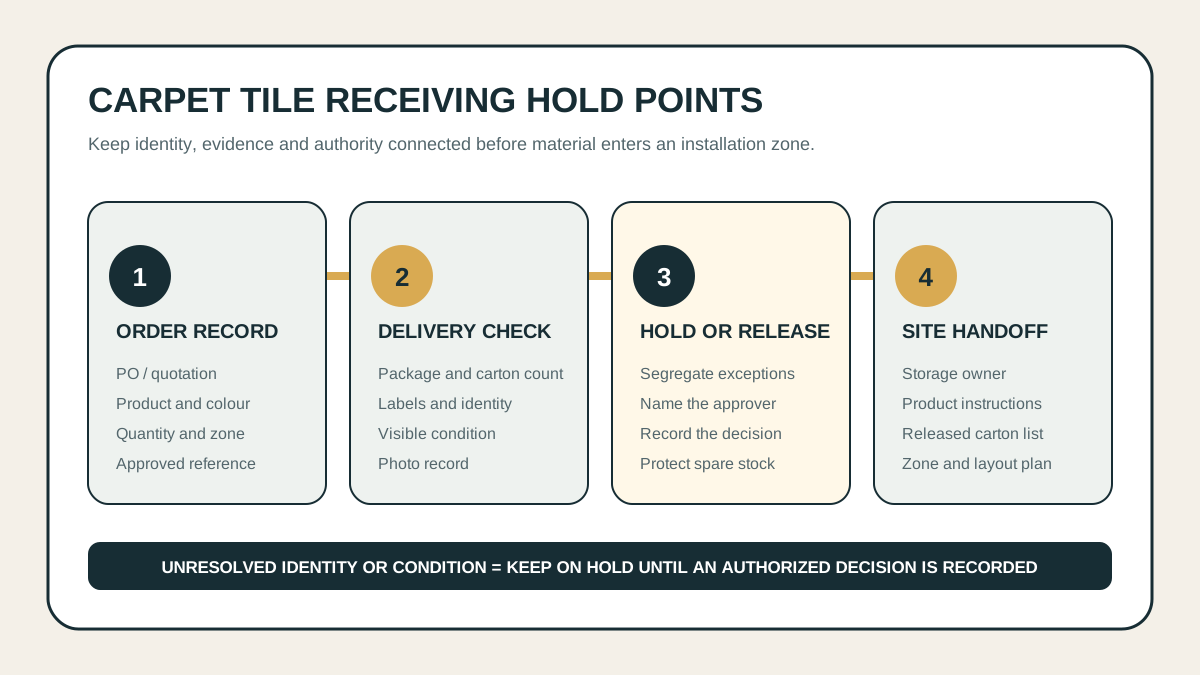
Pain Point Addressed
A shipment can match the order total while carton identities, visible condition, zone allocation or site-storage instructions remain unresolved. Installing first and reconciling later weakens the evidence needed to isolate a problem.
Quick Answer: Inspect Before Any Tile Is Installed
At delivery, match the shipment to the controlled order record, count the shipping units and cartons, capture the carton labels, inspect accessible material for visible damage or mismatch, and assign every affected carton a released, held, spare or unresolved status. Keep held material physically identified and out of installation until the authorized project parties resolve the exception.
This is a commercial receiving workflow, not a universal installation specification. Conditioning, stacking, site climate, fixing and product acceptance must follow the confirmed product instructions, approved project documents and responsible installer or consultant.
Prepare an Arrival Pack Before Delivery
Give the receiving team one controlled pack instead of asking them to search email threads while the vehicle is waiting. The pack should use the same product references and revisions as the quotation and purchase order.
- Commercial order: purchase order or quotation reference, ordered quantity, packing basis and agreed delivery split.
- Product identity: product or design reference, colour reference, quoted construction and any approved sample reference.
- Project allocation: floor, room or zone schedule, plus the cartons intended for retained spare stock.
- Evidence plan: required label photographs, arrival photographs, document references and the person authorized to release or hold material.
- Site handoff: secure receiving location, storage owner, installer contact and the actual product instructions available to the site team.
If the physical sample is the appearance reference, record its label or approval ID rather than relying on a phone-screen image. The commercial carpet sample approval checklist explains how to keep the sample decision separate from later order and site decisions.
Check Shipment Identity and Quantity
| Check level | Record on arrival | Why it belongs in the file |
|---|---|---|
| Shipment or pallet | Shipping marks, package count, visible external condition and delivery reference | Connects the physical delivery to the transport and purchasing records. |
| Carton | Product/design, colour and batch or production reference exactly as printed; carton quantity | Allows mismatched or unidentified cartons to be isolated before installation. |
| Accessible tile | Face appearance, edges, backing and obvious visible condition | Creates an early exception record without claiming hidden or performance testing. |
| Zone allocation | Floor, room, phase and spare-stock destination | Prevents released cartons and reserve stock from losing their intended use. |
| Decision | Released, held, spare or unresolved; approver, date and action | Shows the installer what may proceed and what must remain segregated. |
Copy label wording exactly. Do not replace an unknown batch, colour or construction field with an assumption.
The carpet tile category includes a blank batch, zone and spare record that teams can download and adapt. Use one row or record for each product, colour, label identity and destination zone.
Inspect Visible Condition Without Turning Receipt Into Final Acceptance
Record crushed, wet, opened or otherwise visibly affected packaging and identify the exact cartons. Where the project procedure permits opening cartons, compare accessible tiles against the order record and approved reference under suitable light. Photograph the label and the condition together when practical so the evidence is not separated from its identity.
- Identify: copy the shipment, pallet and carton references before material is moved.
- Isolate: mark affected cartons and keep them separate from released installation stock.
- Document: take overview and detail photographs, noting the carton label, count and inspection date.
- Notify: send a concise exception record to the responsible buyer, supplier, installer and project approver.
- Decide: record the authorized release, replacement, further review or other agreed action before use.
Separate Released, Held and Spare Material
| Status | Meaning | Minimum site action |
|---|---|---|
| Released | Required receiving checks are complete for the identified cartons under the project procedure. | Move only to the approved storage or installation handoff and retain label traceability. |
| Held | A mismatch, damage concern or missing decision remains open. | Segregate, mark and prevent installation until the named approver closes the action. |
| Spare | Material is reserved for the project’s future replacement plan. | Record quantity, labels and storage location; do not consume it as ordinary installation stock without approval. |
| Unresolved identity | The carton cannot yet be connected confidently to the controlled record. | Treat as hold material and obtain clarification rather than assigning a convenient zone. |
Status names can follow the buyer’s quality system. The important controls are unambiguous identity, physical separation, authority and a dated decision.
If more than one label batch or production reference is delivered, do not assume they may be mixed within the same visual field. Ask the supplier and project team how the exact product and approved layout should be handled, then record the decision by zone.
Protect Site Storage and Read the Actual Instructions
Move released and held cartons into a clean, secure area protected from site damage and unauthorized use. Keep labels visible or mapped, preserve carton identity, and prevent spare stock from disappearing into active work. Confirm who monitors the area and who can authorize movement.
Do not invent one acclimation time, temperature, humidity, carton-stacking method or opening sequence for every carpet tile. Manufacturer instructions differ, and project conditions matter. Obtain the instructions for the exact selected product and make their site requirements part of the release checklist.
Before installation, connect the storage and release record to the substrate, adhesive and fixing review. The commercial carpet tile adhesive and subfloor guide explains what information buyers should coordinate without treating a general guide as product-specific approval.
Use a Representative Review Before Full Release
Where the project procedure requires it, review representative material before broad installation. Check the product and colour references, tile direction, multi-tile appearance, edge condition and planned zone under the project’s intended lighting. Record who reviewed it and whether the decision releases all matching cartons or only a defined area.
The layout decision should already be tied to a drawing revision. Use the office carpet tile layout approval guide to distinguish product selection, permitted arrangement, direction plan and commercial order release.
Connect Receiving Records to Installation and Handover
At site handoff, give the installer the released-carton list, zone plan, direction decision, current product instructions and open holds. After installation, retain the relevant label records, spare-stock location and approved plan for the facilities team. A later replacement is easier to investigate when the original material identity and zone are still traceable.
For FOB orders, transport and export-document responsibilities are a separate commercial workstream. Review the FOB Tianjin Port buyer checklist before shipment, then use this receiving workflow when the physical delivery reaches the buyer’s nominated destination.
Send a Comparable RFQ Before Shipping
A useful receiving plan starts with a quotation that can be traced. When requesting a VCARPETS carpet tile quotation, send the details below. VCARPETS supplies B2B orders on an FOB Tianjin Port basis; sample format, sample cost, timing and product-specific documents are confirmed for the individual project.
- Application and area: space type, estimated square metres and project phase.
- Product shortlist: design, colour, construction or backing preferences, with any mandatory standard named.
- Approval reference: sample, drawing or finish schedule that will control the order.
- Packing and labels: information the receiving team must be able to reconcile.
- Allocation: floor, room or zone split and any spare-stock plan.
- Destination: country and nominated logistics point for the FOB discussion.
- Programme: target delivery, site access, storage and installation dates.
- Documents: product or project files required for evaluation; applicability is confirmed before reliance.
Send the carpet application, estimated area, destination, target date and receiving requirements through the VCARPETS project inquiry form for a project-specific discussion.
Sources and Scope
The workflow was informed by publicly available installation and receiving guidance from Interface (APAC carpet tile installation instructions, 2023), Tarkett/DESSO installation instructions, Wools of New Zealand (carpet tile installation guide, September 2023) and INSTALL Floorcovering Professionals. These sources consistently make product identity, labels, quantity, visible inspection and product-specific site instructions relevant controls. Their numeric limits and proprietary systems are not VCARPETS product specifications.
This page supports procurement planning. It does not replace the selected product’s technical data, installation instructions, contract, transport claim process, local requirements or professional project advice.
Carpet Tile Delivery Inspection FAQ
What should a commercial carpet tile buyer check first at delivery?
First connect the shipment to the controlled purchase record: delivery reference, package and carton counts, exact carton labels, product and colour identity, visible external condition and intended project zone. Isolate anything that cannot be reconciled before installation.
Does signing a delivery receipt mean the carpet tiles are fully accepted?
Not automatically. The contract and agreed project procedure should define what the signature means. A transport receipt may record package delivery while appearance, document, sample, damage or installation-release checks remain separate.
Can cartons with different batch or production labels be mixed?
Do not assume that they can. Record each label identity and ask the supplier and project approver how the exact product should be allocated. Product-specific instructions and the approved zone plan should control the decision.
How long should carpet tiles acclimate on site?
There is no universal time or climate condition that this guide can assign to every product. Obtain and follow the instructions for the exact selected carpet tile, together with the project’s site-condition requirements.
What should the team do with visibly damaged cartons?
Identify and segregate the affected cartons, photograph the carton label and condition, record the quantity and notify the responsible commercial and project parties. Do not install the material until the authorized decision and any required further inspection are recorded.
What information does VCARPETS need for a carpet tile quotation?
Send the application, estimated area, product or construction preference, colour or sample reference, destination, target programme, zone or packing needs and required documents. Product specifications, samples, costs and timing are confirmed for the individual B2B project.
Buyer Questions
Frequently Asked Questions
What should a commercial carpet tile buyer check first at delivery?
First connect the shipment to the controlled purchase record: delivery reference, package and carton counts, exact carton labels, product and colour identity, visible external condition and intended project zone. Isolate anything that cannot be reconciled before installation.
Does signing a delivery receipt mean the carpet tiles are fully accepted?
Not automatically. The contract and agreed project procedure should define what the signature means. A transport receipt may record package delivery while appearance, document, sample, damage or installation-release checks remain separate.
Can cartons with different batch or production labels be mixed?
Do not assume that they can. Record each label identity and ask the supplier and project approver how the exact product should be allocated. Product-specific instructions and the approved zone plan should control the decision.
How long should carpet tiles acclimate on site?
There is no universal time or climate condition that this guide can assign to every product. Obtain and follow the instructions for the exact selected carpet tile, together with the project’s site-condition requirements.
What should the team do with visibly damaged cartons?
Identify and segregate the affected cartons, photograph the carton label and condition, record the quantity and notify the responsible commercial and project parties. Do not install the material until the authorized decision and any required further inspection are recorded.
What information does VCARPETS need for a carpet tile quotation?
Send the application, estimated area, product or construction preference, colour or sample reference, destination, target programme, zone or packing needs and required documents. Product specifications, samples, costs and timing are confirmed for the individual B2B project.
Turn This Guide Into a Quote
Send Your Project Requirements After Reading This Guide
If this topic matches your project, send the carpet application, estimated area, destination, and required date. VCARPETS can recommend the related product path and reply with sample, MOQ, lead time, and quotation details.
Email: sales@vcarpets.com
Continue Your Specification