
How to Verify a Commercial Carpet Supplier Before a Bulk Order
A practical B2B checklist for checking the legal counterparty, supplier role, product evidence, sample reference, quotation, payment details and inspection plan before a commercial carpet purchase.

Pain Point Addressed
A polished website, marketplace badge or product photo does not prove that the contracting company, quoted carpet construction, technical documents and bulk shipment all match.
Answer First: Verify the Company, the Product and the Transaction
Before a bulk commercial carpet order, verify three connected records: the legal counterparty that will sign and receive payment, the exact carpet construction being quoted, and the controls that connect the approved sample and documents to production, packing and shipment. If any one of these records changes, the buyer should pause and obtain a written explanation before releasing the order.
Supplier verification is not a single certificate and it is not a promise that a transaction cannot fail. It is a documented decision process. The U.S. International Trade Administration recommends due diligence on foreign companies and offers company-profile services for buyers that need a deeper independent background check. For carpet procurement, that company check must be joined to product-specific evidence because a legitimate business can still quote the wrong construction or an unsuitable document set.
| Verification layer | Evidence to request | Decision before order |
|---|---|---|
| Legal counterparty | Registered company name, business address, authorized contact and contract or invoice entity | The buyer knows who is responsible for the sale and dispute process |
| Supplier role | Written explanation of seller, manufacturer or production partner roles for the nominated product | The buyer understands who makes, checks, invoices and corrects the order |
| Product identity | Named product, construction, fiber, backing, size or width, color or artwork and revision | The quotation, sample and documents refer to the same configuration |
| Technical evidence | Product data, applicable test reports, installation and maintenance information requested for the project | Every claim has an identifiable source and product match |
| Commercial scope | Quantity basis, unit, MOQ, packing, schedule milestones, Incoterm, named place and validity | Competing quotations cover the same scope |
| Quality control | Approved reference, inspection plan, acceptance criteria, hold points and corrective-action owner | The parties know what is checked and who may release production or shipment |
| Payment control | Beneficiary details, currency, milestones and a controlled process for any account change | The payment instruction matches the agreed contracting record |
This is a procurement framework. Independent legal, financial, sanctions, customs or compliance checks depend on the buyer's jurisdiction and risk policy.
Step 1: Confirm the Legal Entity and Authorized Contact
Record the supplier's full registered name before comparing products. The website name, marketplace storefront, email signature, quotation header, contract party and payment beneficiary may use different names. A difference is not automatically fraud, but it must be explained and documented before payment.
- Match the names. Compare the legal name on the registration record with the quotation, pro forma invoice, sales contract and beneficiary instruction. Ask why an affiliate or another entity appears.
- Verify the contact. Confirm the person's role and company email or another independently obtained contact route. Do not rely only on the message that delivered a changed payment instruction.
- Check the address and business scope. Use an official registry or a qualified independent service when the order value or buyer policy justifies it. Save the date and source of the check.
- Escalate material changes. A late change to the contracting entity, beneficiary, currency or payment route should trigger a second-channel verification and written approval under the buyer's own control.
Step 2: Ask What Role the Supplier Performs
A buyer often asks whether a company is a factory or a trading company. That label is too coarse for a purchasing decision. What matters is the disclosed supply chain and the supplier's control over the nominated product. A seller can coordinate more than one production source; a factory can also outsource a process. Ask who performs each critical task and keep the answer with the quotation.
| Buyer question | Useful answer | Weak answer |
|---|---|---|
| Who produces the nominated carpet construction? | Named responsible production source or a clear statement that it will be confirmed for the selected SKU | A generic factory photo with no connection to the product |
| Who controls the approved sample and production reference? | A named owner, reference code, revision and release step | The sample looks similar |
| Who owns quality decisions and corrective action? | Inspection responsibilities, acceptance criteria and escalation contact | Quality guaranteed |
| Who issues the product documents? | Document issuer, product match, method, date and scope | Certificates available |
| Who invoices and receives payment? | Contracting entity and beneficiary relationship explained in writing | Pay the account in the message |
Remote video, site visits and third-party inspections can support verification when they are planned around the actual order. They should show the named process, product or stock and a live date reference where practical. A prerecorded factory tour is marketing material unless the buyer can connect it to the current counterparty and product.
Step 3: Connect the Quotation to One Product Evidence Pack
The Carpet and Rug Institute's Model Specification for Commercial Carpet lists vendor submittals such as test reports, product data, installation instructions, adhesive information, relevant environmental information, maintenance instructions, warranty information and requested samples. A buyer does not need every possible document for every order. The useful approach is to request the records required by the destination, specification and application, then verify that they belong to the exact quoted construction.
| Record | Match these fields | Do not assume |
|---|---|---|
| Quotation | Product name, fiber, construction, backing, size or width, color or artwork, quantity and unit | A short marketplace title defines the bulk specification |
| Technical data sheet | Product or family identifier, construction fields, revision and issuing company | One data sheet covers every backing or fiber option |
| Test report | Sample identifier, construction, test method, result, laboratory, issue date and applicable scope | A report for a similar product proves the quoted alternative |
| Physical sample | Sample purpose, reference code, dimensions, color or artwork, backing and approver | A small swatch approves pattern scale, performance and bulk batch |
| Installation information | Backing, subfloor, adhesive or fixing route, conditioning and local installer review | One installation method fits every site |
| Maintenance information | Nominated product, cleaning system, site conditions and warranty dependencies | Generic cleaning advice preserves every warranty |
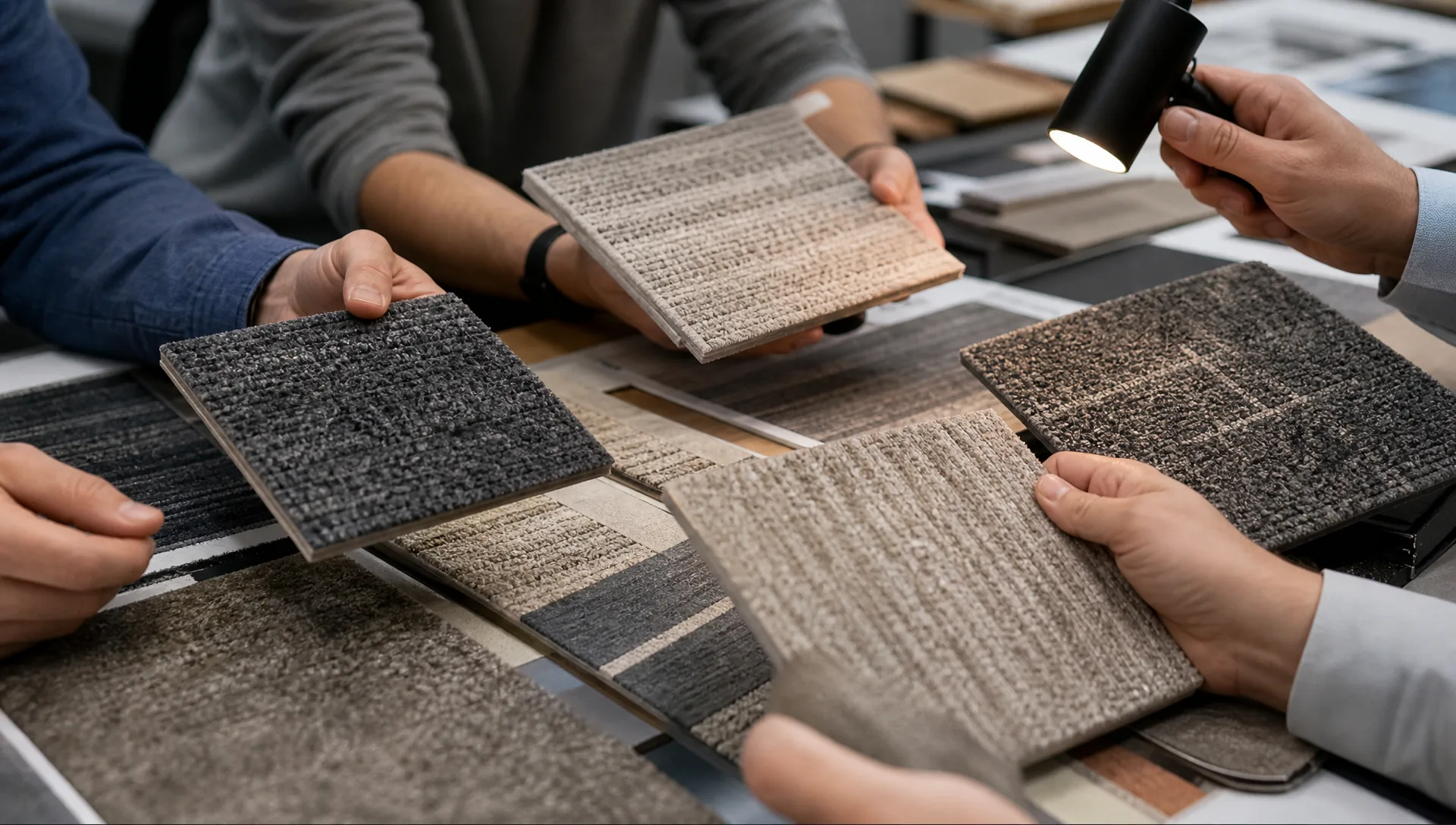
Use a one-page evidence register. Give each document and sample a reference, record what product or claim it supports, and mark any mismatch as open. If the supplier proposes an alternative fiber, backing or construction, treat it as a new line that needs its own evidence review.
Step 4: Make the Sample Approval Traceable to Bulk Production
A paid or free sample is useful only when its approval purpose is clear. A color swatch may support early design selection. A full tile or larger patterned panel can support construction and layout review. A production reference can support the agreed bulk-control process. None of these steps creates a universal guarantee that an unreviewed batch, backing or document will match.
- Identify the sample. Record product, construction, color or artwork, size, backing, date and sample reference.
- State what it approves. Separate appearance, material, dimensions, pattern scale, layout direction, backing and document review.
- Record open conditions. List required test reports, final artwork, production tolerance, packing or site-installation questions that remain unresolved.
- Name the approver. Record who may approve the sample and whether consultant, designer, contractor or buyer confirmation is required.
- Keep a controlled reference. Agree who retains the approved sample or signed record and how production or pre-shipment inspection will compare against it.
VCARPETS can discuss project-specific samples. Format, cost, preparation time, courier route and what the sample represents are confirmed against the selected product and destination; this guide does not promise a free sample or fixed dispatch time.
Step 5: Compare the Commercial Offer, Not the Headline Price
A verified company and a plausible sample still do not make two quotations comparable. Normalize the product, sales unit, quantity, packing, schedule and delivery term. Ask the supplier to label every assumption that remains open.
| Commercial field | Buyer record | Supplier confirmation |
|---|---|---|
| Quantity | Net area, ordering allowance and retained stock shown separately | Quoted pieces, square metres, cartons or rolls and conversion basis |
| Unit price | Required currency and comparison unit | Price unit, included construction and any option difference |
| MOQ | Trial, phase or full project quantity | MOQ for the exact stock, color, artwork and construction |
| Schedule | Sample review, approval, required cargo-ready and site dates | Project-specific milestones and dependencies rather than one generic lead time |
| Packing | Label, pallet, carton or roll and receiving needs | Actual packing unit, dimensions, gross weight and marks after product confirmation |
| Trade basis | Preferred Incoterm and destination plan | Named place or port, Incoterms edition, inclusions and exclusions |
| Validity and changes | Internal approval deadline | Quotation validity and repricing or specification-change process |
VCARPETS currently handles bulk commercial carpet quotations on an FOB Tianjin Port basis. The written quotation must still name the shipment point and identify the exact scope. Ocean freight, insurance, import clearance, destination charges, local delivery and installation should not be assumed inside an FOB carpet price unless the signed contract expressly allocates them.
Step 6: Define Inspection, Release and Problem Escalation
Inspection is most useful when the buyer sets the scope before production. Decide which characteristics will be checked, the sampling basis, acceptable evidence, hold points, who may release shipment and what happens if the result is outside the agreement. A generic inspection certificate with no acceptance criteria does not answer those questions.
- Before production. Freeze the quoted product, approved reference, open documents, order quantity, packing and any inspection requirement.
- During production when justified. Use defined checks for a custom design, new construction, high-value order or other risk identified by the buyer.
- Before shipment. Confirm product and packing identity, quantity, visible workmanship, labels and the agreed sample or specification references within the inspection scope.
- At receiving. Photograph carton or roll labels, record quantity and visible condition, segregate discrepancies and preserve evidence before installation.
- For corrective action. Name the responsible contacts, required evidence, decision time and remedy process in the contract or quality plan.
A Copyable Supplier Verification Request
Use this request after the first product discussion. Remove fields that do not apply and add destination-specific legal or technical requirements with qualified advice.
- Project: Buyer company, destination, building type, application zones and new build or renovation.
- Product: Carpet tile or broadloom, preferred fiber and backing, color or artwork, dimensions and permitted alternatives.
- Quantity: Area or pieces by zone, drawing status, proposed allowance and separate spare-stock requirement.
- Evidence: Required TDS, test method, sample, installation, maintenance, warranty or sustainability records.
- Approval: Approver, sample purpose, target review date, open conditions and any third-party inspection.
- Commercial: Currency, unit, Incoterm and named place, destination, target dates and payment-control requirements.
Red Flags That Require a Pause, Not an Automatic Accusation
A red flag is a reason to investigate, not proof of fraud. Document the explanation and decide under the buyer's risk policy. For a material discrepancy, use an independent registry, bank, inspection firm, testing body, customs adviser or legal professional as appropriate.
- Unexplained entity mismatch. The website, quotation, contract and beneficiary show different companies with no written relationship.
- Last-minute payment change. New bank details arrive only by email or chat and cannot be verified through a previously established channel.
- Generic or mismatched documents. The TDS or report does not identify the quoted product, construction, method, issuer or current scope.
- Sample without traceability. The sample has no reference, and the supplier cannot explain how it will control the bulk order against it.
- Pressure to skip review. The supplier asks for payment before clarifying the specification, open conditions or contracting entity.
- Universal promises. Every product is described with the same certification, MOQ, lead time, performance or installation claim without construction-specific evidence.
Sources, Evidence Boundaries and VCARPETS Inquiry Path
Company-verification framework: U.S. International Trade Administration pages on performing due diligence, company and partner risk, commercial-service background checks and the International Company Profile service. These resources establish the value of checking a foreign business; they do not verify VCARPETS or any other named supplier in this article.
Carpet submittal framework: Carpet and Rug Institute Model Specification for Commercial Carpet. Its suggested vendor submittals informed the product-data, test-report, installation, maintenance and sample checklist. Project specifications, test methods and legal requirements must be selected for the buyer's actual market and application.
Demand signal: recent Reddit discussions describe buyer concern about legal-name matching, business registrations, samples and document authenticity when sourcing from China. These are individual discussions, not search-volume data or proof that any supplier is unsafe. Their questions were used only to make the checklist more practical.
For a VCARPETS review, send the application, area or quantity, product or reference, destination, required documents, sample purpose and target dates. The response should identify confirmed product evidence and open conditions. Prices, MOQ, production time, test reports, packing and sample arrangements are confirmed for the selected product and project.
Buyer Questions
Frequently Asked Questions
Is a factory claim enough to verify a commercial carpet supplier?
No. Confirm the legal contracting entity, the supplier's role, the responsible production source for the nominated product, who issues the quotation and invoice, and who controls samples, documents, inspection and corrective action. A factory label or marketplace badge does not connect those records by itself.
Should a buyer reject every trading company?
No. The useful question is whether the role is transparent and controlled. A supplier or trading company can be suitable when the contracting entity, production source, product evidence, quality responsibilities, payment beneficiary and escalation route are clear. Ask for the actual chain instead of relying on a label.
Does a test report prove that the quoted carpet complies?
Only when the report can be matched to the quoted construction and the buyer's required method, scope and destination rule. Check the report issuer, sample or product identifier, construction, test method, result, issue date and validity. A report for a similar product is not automatic evidence for an alternative.
Can a physical sample replace a technical data sheet?
No. A sample helps review appearance, feel, dimensions, backing and workmanship within its stated purpose. The quotation and product-specific documents must separately identify the construction, performance claims, installation requirements and commercial terms.
What should a buyer send VCARPETS for a verification-ready quotation?
Send the application, area or quantity, destination, preferred product or construction, required standards or documents, sample purpose, target dates and any planned inspection. VCARPETS will confirm available product evidence, sample route and commercial terms for the selected configuration rather than treating generic website text as the final specification.
Turn This Guide Into a Quote
Send Your Project Requirements After Reading This Guide
If this topic matches your project, send the carpet application, estimated area, destination, and required date. VCARPETS can recommend the related product path and reply with sample, MOQ, lead time, and quotation details.
Email: sales@vcarpets.com
Continue Your Specification
Related Products


Browse the Full Range
Related Product Categories
Product Category
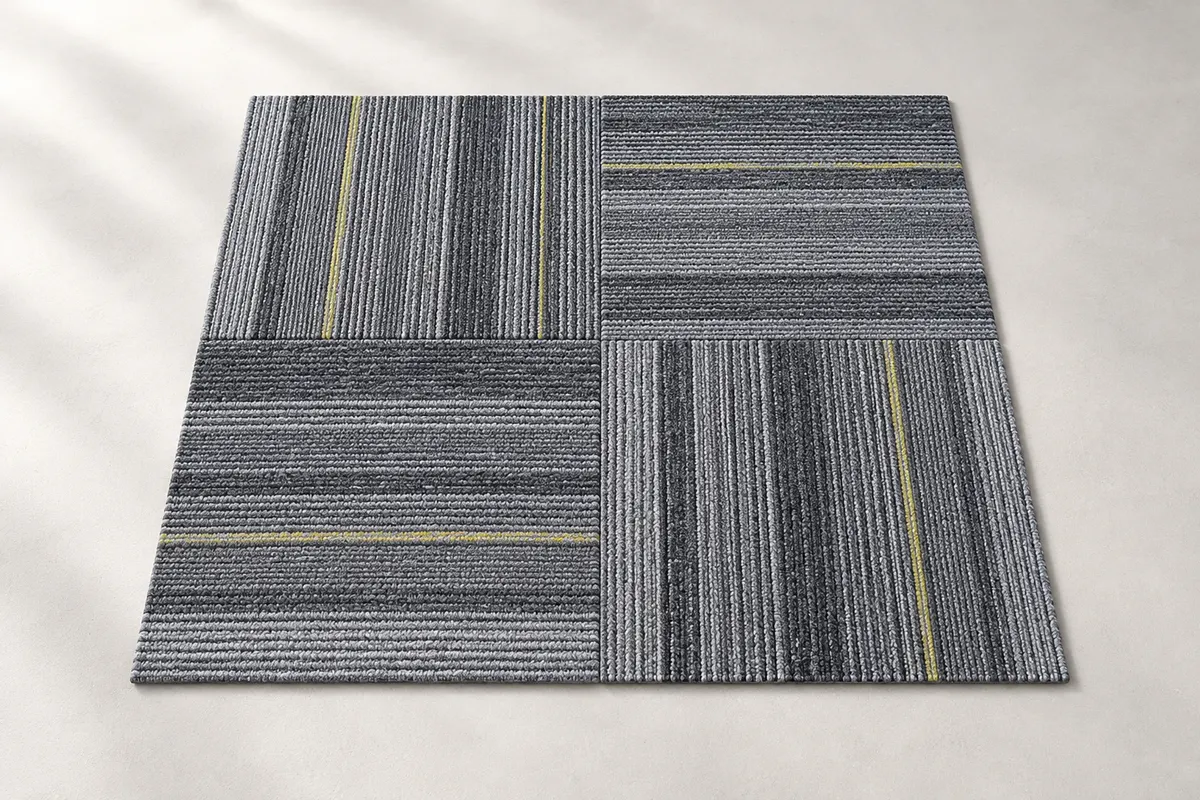
Commercial Carpet Tiles
Modular commercial carpet tiles for offices, hotels, corridors, education, and phased replacement programs.
View Category →
Product Category
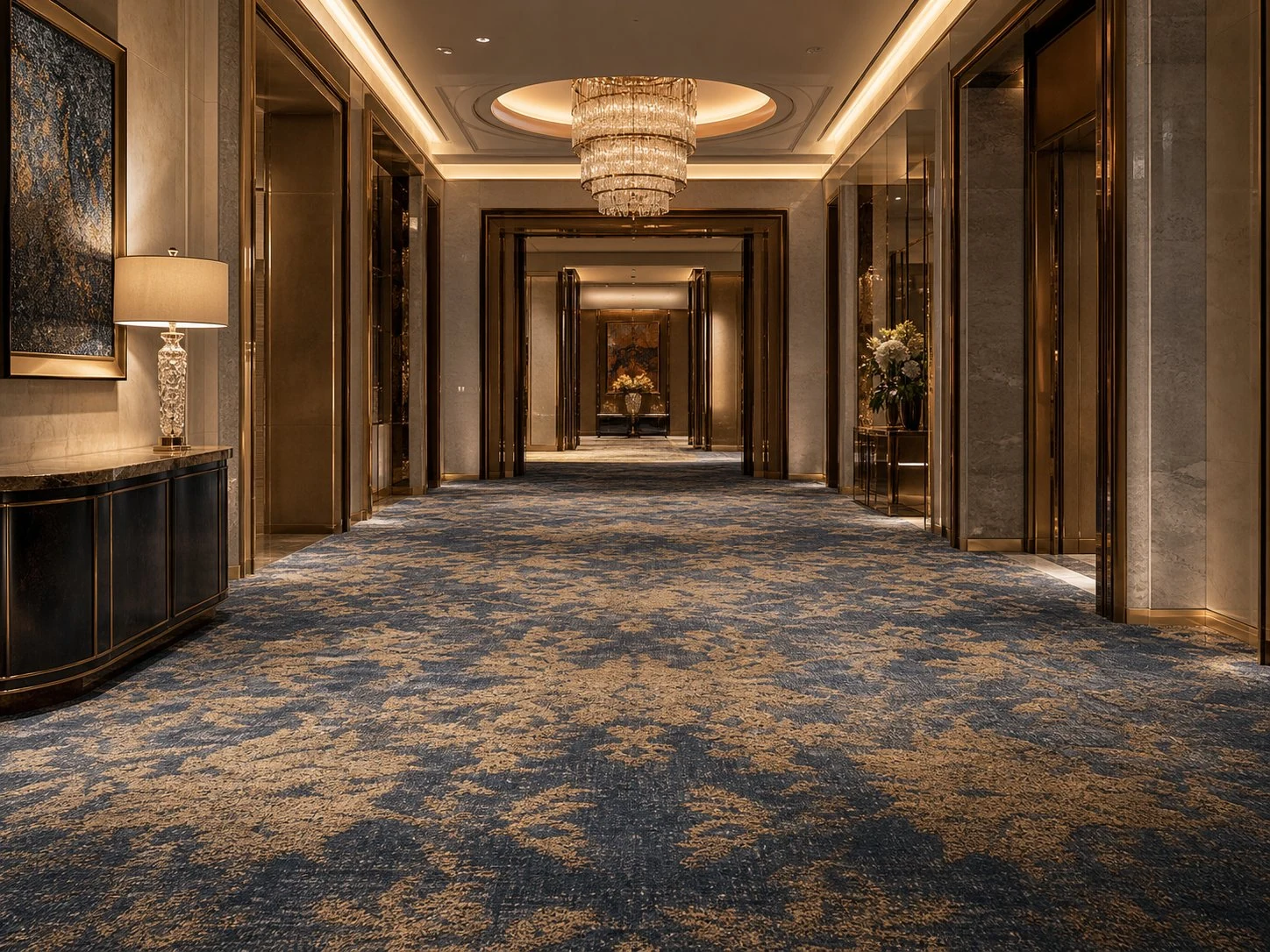
Wall-to-Wall Carpets
Custom broadloom carpet for guestrooms, corridors, lobbies, ballrooms, and branded hospitality interiors.
View Category →