
Carpet Tiles for Open-Plan Offices: Acoustic Performance and Selection Guide
Separate sound absorption, impact transmission and speech privacy before choosing an office carpet tile.
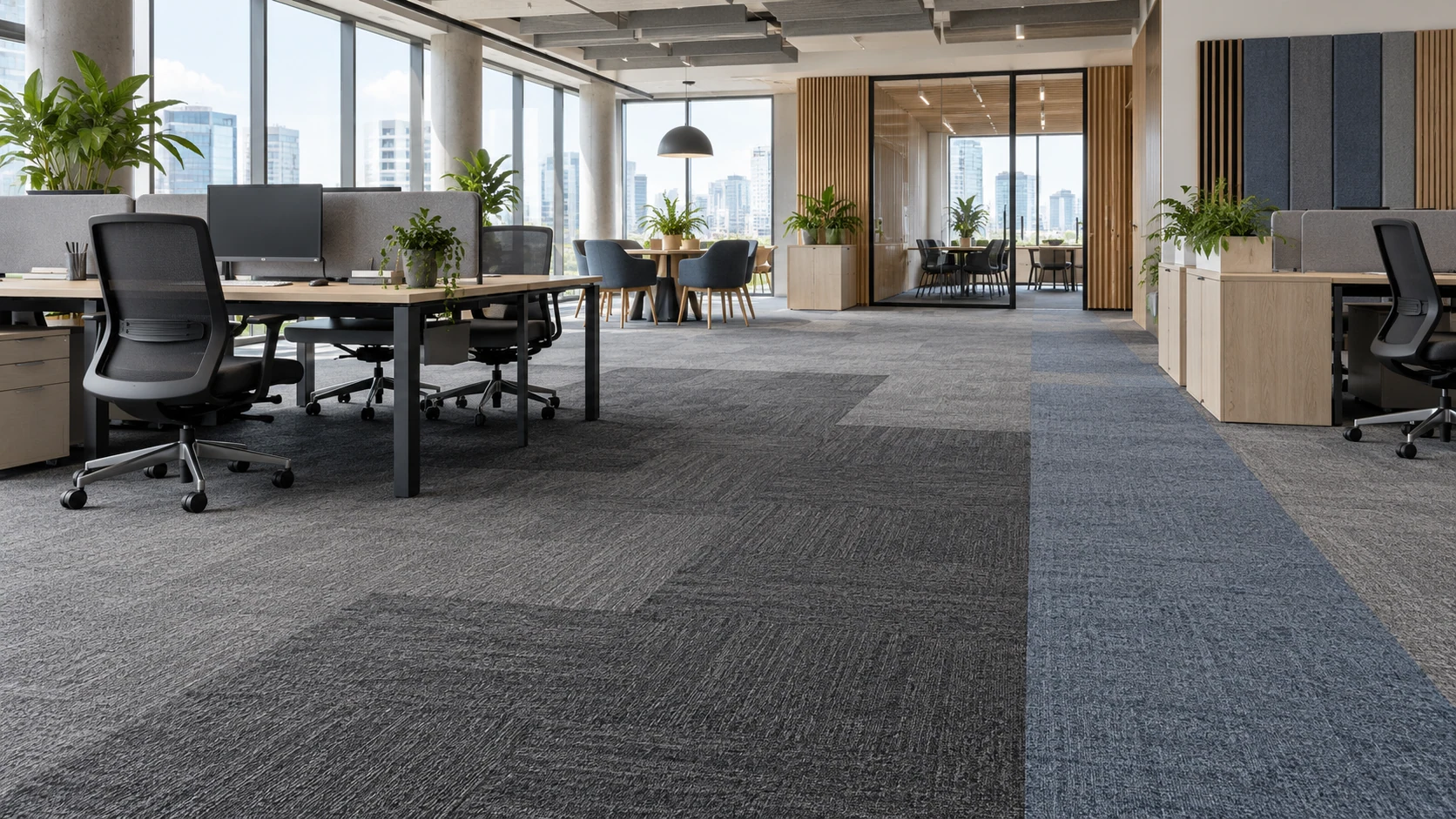
Pain Point Addressed
An attractive carpet tile or an isolated acoustic number does not tell a fit-out buyer whether the proposed floor addresses the actual office noise problem.
Quick Answer: Start with the Noise Problem
For an open-plan office, shortlist carpet tiles alongside the room’s acoustic brief, traffic and maintenance requirements. Ask whether the concern is footsteps near desks, reflected sound in the room, impact noise reaching a lower floor or intelligible conversations between teams. Those are different questions and need different evidence.
Carpet can contribute sound absorption and affect impact transmission, but the result depends on the construction and assembly. Selecting a floor finish alone does not guarantee quiet workstations or confidential conversations. A project reviewer should consider the ceiling, walls, screens, desk arrangement and building services as well.
This guide helps flooring distributors, fit-out contractors and procurement teams prepare a product comparison. It does not assign an acoustic rating to VCARPETS products or replace the office’s acoustic design.
Keep Three Acoustic Questions Separate
| Buying question | Evidence to discuss | Interpretation limit |
|---|---|---|
| Will the surface absorb sound in the room? | An absorption report, including NRC or another specified absorption metric and the test mounting. | Absorption depends on frequency and the tested construction; a single rating does not describe speech privacy. |
| Will footfall transmit to the room below? | Impact-transmission evidence for the relevant floor-ceiling assembly, using the project’s requested metric. | An assembly rating such as IIC differs from a floor-covering improvement value such as ΔLw. Compare like with like. |
| Will nearby speech remain distracting or private? | A room-level acoustic review that includes layout and other treatments. | A carpet absorption or impact result does not certify workstation privacy. |
The CRI technical bulletin explains the distinction between absorption and assembly impact testing. Use current project requirements and exact report conditions; no universal VCARPETS rating is implied.
Avoid converting an absorption coefficient into a promised decibel reduction. Also keep laboratory results separate from a completed-room assessment. Ask the consultant which evidence is relevant before making an acoustic number a purchasing condition.
Plan the Floor with the Rest of the Office
Research by Yadav and colleagues measured sound in 43 occupied open-plan offices. It reported associations involving carpeting and ceiling absorption; those observations are useful design context, not a guaranteed improvement from replacing one carpet product with another. A similar-looking office photograph cannot reproduce the measured conditions.
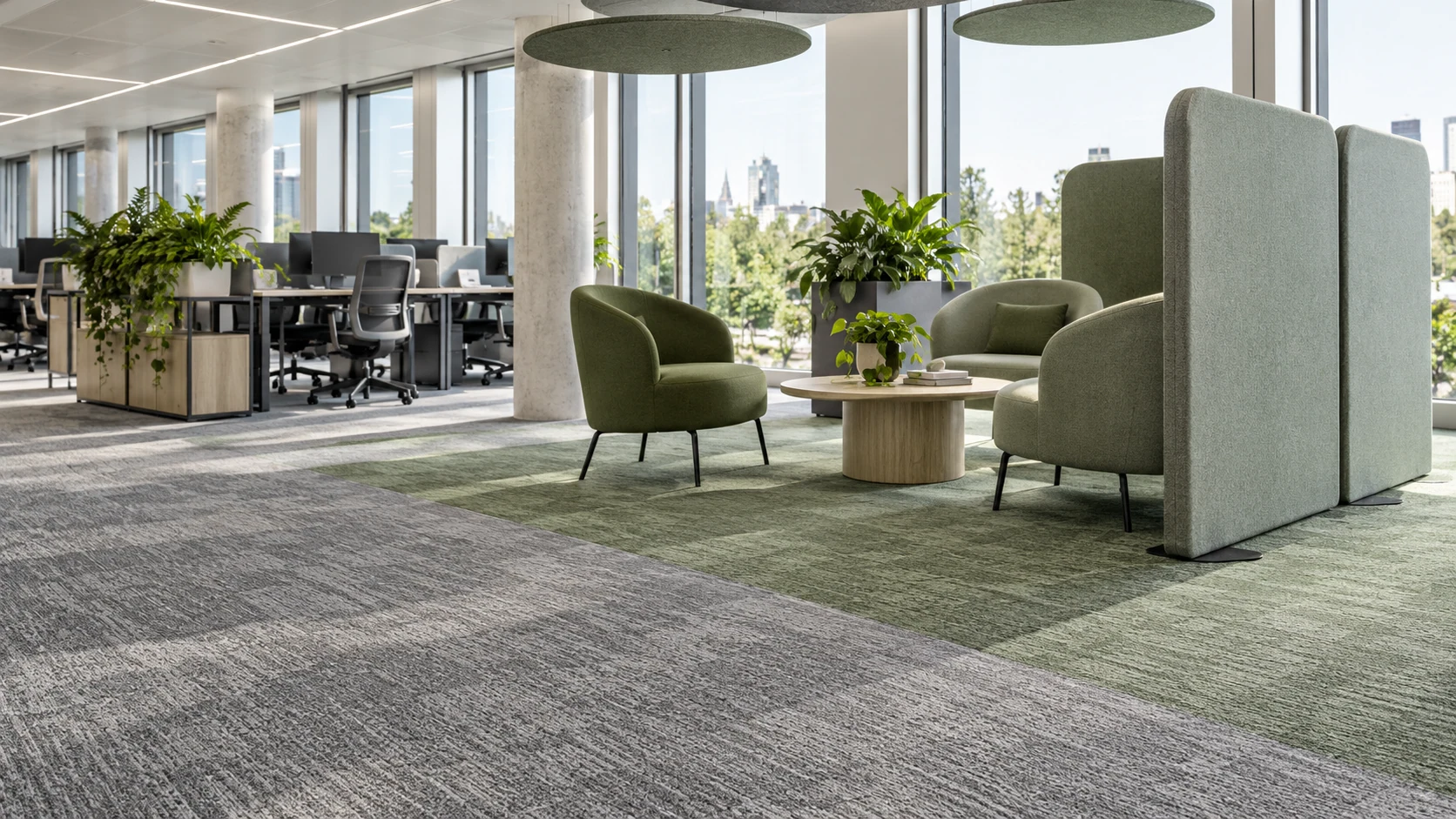
- Locate the complaint: Mark focus work, collaboration, meeting rooms, circulation and printer or refreshment areas on one plan. Identify which spaces need an acoustic review before choosing finishes.
- Record neighbouring uses: Note meeting rooms, occupied floors below and any interfaces with raised floors. Share the relevant build-up with the reviewer rather than treating carpet as the complete floor.
- Coordinate responsibilities: Keep flooring selection, acoustic design and installation approval assigned to named parties. Record unresolved items so a colour approval does not silently become a performance approval.
Build a Comparable Product and Evidence Record
Create one record for each nominated construction. Keep alternatives on separate lines even when they share a colour name or module size. A report supplied with a quotation should be traceable to the product being offered.
| Record field | Ask the supplier to identify | Buyer’s next check |
|---|---|---|
| Product and sample | Design/SKU, colour, fibre, pile and backing reference. | Does the sample represent the quoted option? |
| Acoustic document | Report number, laboratory, tested construction, mounting and reported metric. | Can the reviewer use this report for the proposed assembly? |
| Backing or added layer | The precise backing and any separate underlayer or fixing proposal. | Is that combination permitted and covered by the evidence? |
| Everyday use | Expected foot traffic, chair casters, movement and maintenance routine. | Which use requirements need separate evidence? |
| Substitutions | Any changed fibre, backing, layer or installation condition. | Does the original acceptance still apply? |
Use the carpet tile backing comparison when preparing alternatives and the rolling-chair fit-out guide for workstation use. Those decisions should be checked alongside acoustic evidence, not inferred from it.
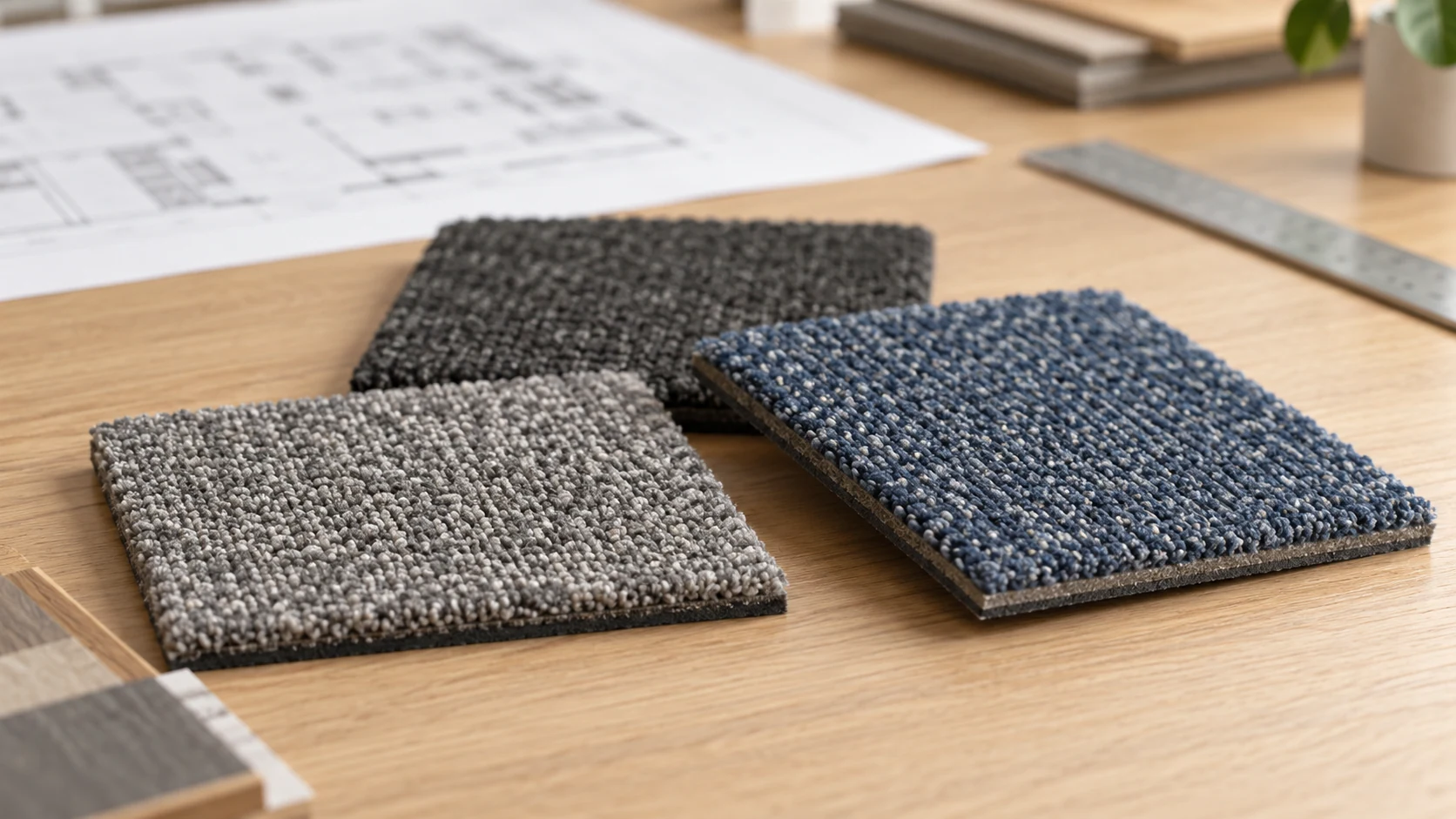
Use Samples for the Decisions They Can Support
A material swatch helps compare colour, texture and edge appearance. An installed sample area can help the team review joints, chair movement, transitions and the proposed fixing arrangement. Neither is an acoustic laboratory report. Identify the purpose of each review and retain the accepted sample reference.
- Review under project lighting: Place adjoining modules in the proposed direction and compare them from the main entrance and workstation sightlines. Record which colour and layout are accepted.
- Review chair and traffic zones: Use the actual chair type where possible and ask the installer to check the proposed product and fixing. Agree how later replacements will be identified.
- Review the floor interface: For concrete, discuss site preparation with the installer. For access panels, check service access and reinstatement. Do not add an underlayer simply because it feels softer.
- Record open conditions: List missing reports, unresolved assembly details and the person who will close each item before the order or installation is released.
The sample approval checklist provides a separate record for the material decision. Keep it connected to the accepted layout and quotation.
Prepare a Useful Office Carpet Tile RFQ
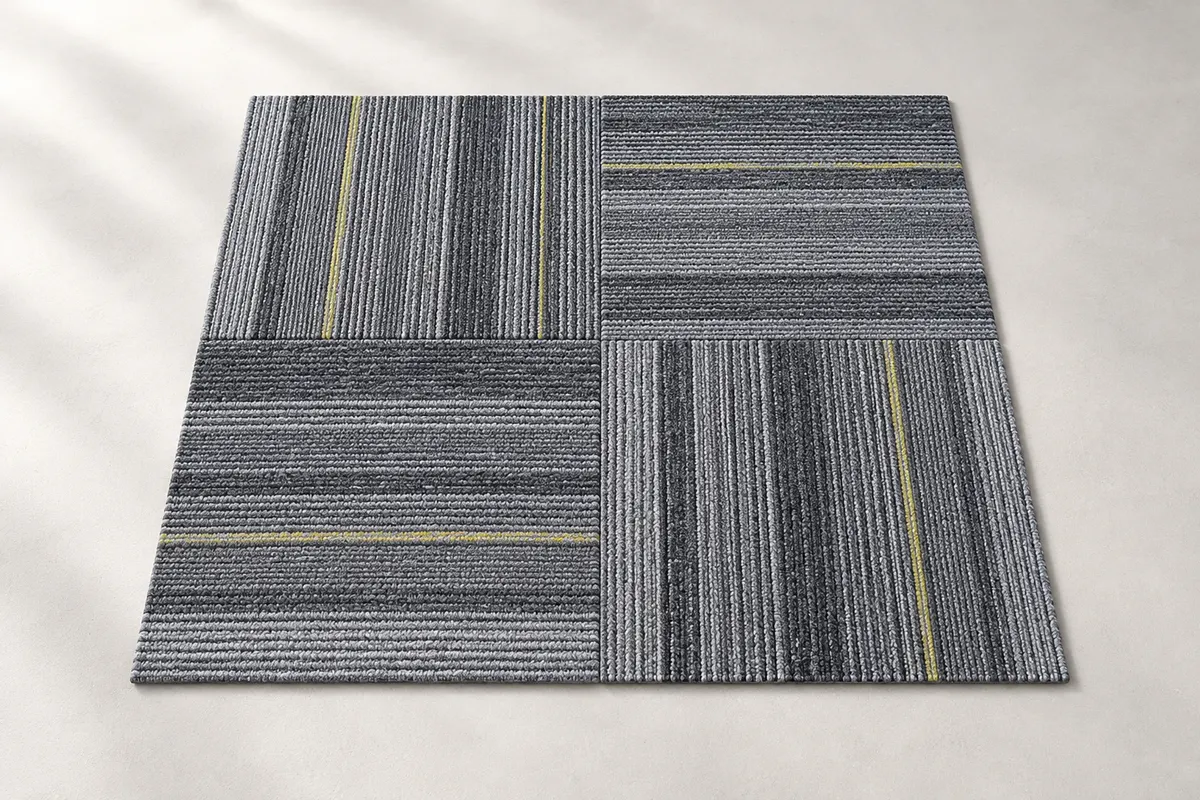
Start with the commercial carpet tile collection or Gray Line nylon option, then identify the sample and construction you want reviewed. Their inclusion here is a product discussion path, not an acoustic approval.
- Project and area: Country/city, office use, approximate net area by zone, phased works and separately stated reserve stock.
- Product preference: Design reference, fibre/backing option, colour, module size and whether alternatives are welcome.
- Acoustic brief: Describe the problem and attach the consultant’s required metric or report criteria when available. State when the brief is still being developed.
- Floor and use: Known substrate or access-floor information, chair/caster use, traffic routes and proposed installation responsibilities.
- Documents and approvals: Requested product, fire, emissions and acoustic evidence, sample format and the decision-maker.
- Commercial scope: Target sample decision and receiving dates, quantity basis, packing information and exclusions.
VCARPETS bulk quotations are FOB Tianjin Port. Confirm sample costs, product availability, production timing and packing for the selected option. Keep net area, cutting allowance, packing rounding and reserve stock visible so different quotations can be compared.
Request an open-plan office carpet tile review with the known details and any open questions. The contact form prefills the topic; it has no drawing-upload field. Use sales@vcarpets.com to arrange document sharing.
Frequently Asked Questions
Do carpet tiles soundproof an open-plan office?
They can contribute to the floor’s acoustic behaviour, but they do not establish speech privacy or sound isolation on their own. Review the room layout, other surfaces and the complete floor assembly against the project’s acoustic brief.
Is NRC the same as IIC?
No. NRC describes sound absorption; IIC concerns impact transmission through a tested floor-ceiling assembly. Ask which issue the project needs to address and compare reports using the same metric and relevant test conditions.
Can I choose an acoustic carpet tile by thickness alone?
Thickness is only one descriptive property. Identify the fibre, pile, backing and any additional layer, then request evidence for that construction. A thicker sample is not a substitute for a comparable report.
Can a softer backing also work under rolling chairs?
That needs separate review for the proposed tile, chair casters, floor and fixing system. Request the appropriate use evidence and review an installed sample; acoustic documentation does not establish chair-wheel suitability.
What should I send for an office carpet tile quotation?
Send the office location, area by zone, nominated product or sample reference, floor information, acoustic concern, required documents, chair use and target dates. Identify unknowns so the quotation can state its assumptions.
What trade basis does VCARPETS use for bulk carpet orders?
Bulk quotations are FOB Tianjin Port. Confirm the selected construction, quantity, packing, sample arrangements, production timing and quotation validity for the actual project.
Sources and Scope
Reviewed on 21 October 2026. Sources: CRI, Acoustical Characteristics of Carpet (2018); Yadav et al., Sound in occupied open-plan offices (linked research paper); and Interface’s Works Effect technical page as an example of separately reported absorption and impact-improvement metrics. Third-party results are not VCARPETS product evidence. The comparison record and RFQ questions above are original procurement aids.
Buyer Questions
Frequently Asked Questions
Do carpet tiles soundproof an open-plan office?
They can contribute to the floor’s acoustic behaviour, but they do not establish speech privacy or sound isolation on their own. Review the room layout, other surfaces and the complete floor assembly against the project’s acoustic brief.
Is NRC the same as IIC?
No. NRC describes sound absorption; IIC concerns impact transmission through a tested floor-ceiling assembly. Ask which issue the project needs to address and compare reports using the same metric and relevant test conditions.
Can I choose an acoustic carpet tile by thickness alone?
Thickness is only one descriptive property. Identify the fibre, pile, backing and any additional layer, then request evidence for that construction. A thicker sample is not a substitute for a comparable report.
Can a softer backing also work under rolling chairs?
That needs separate review for the proposed tile, chair casters, floor and fixing system. Request the appropriate use evidence and review an installed sample; acoustic documentation does not establish chair-wheel suitability.
What should I send for an office carpet tile quotation?
Send the office location, area by zone, nominated product or sample reference, floor information, acoustic concern, required documents, chair use and target dates. Identify unknowns so the quotation can state its assumptions.
What trade basis does VCARPETS use for bulk carpet orders?
Bulk quotations are FOB Tianjin Port. Confirm the selected construction, quantity, packing, sample arrangements, production timing and quotation validity for the actual project.
Turn This Guide Into a Quote
Send Your Project Requirements After Reading This Guide
If this topic matches your project, send the carpet application, estimated area, destination, and required date. VCARPETS can recommend the related product path and reply with sample, MOQ, lead time, and quotation details.
Email: sales@vcarpets.com
Continue Your Specification
Related Products
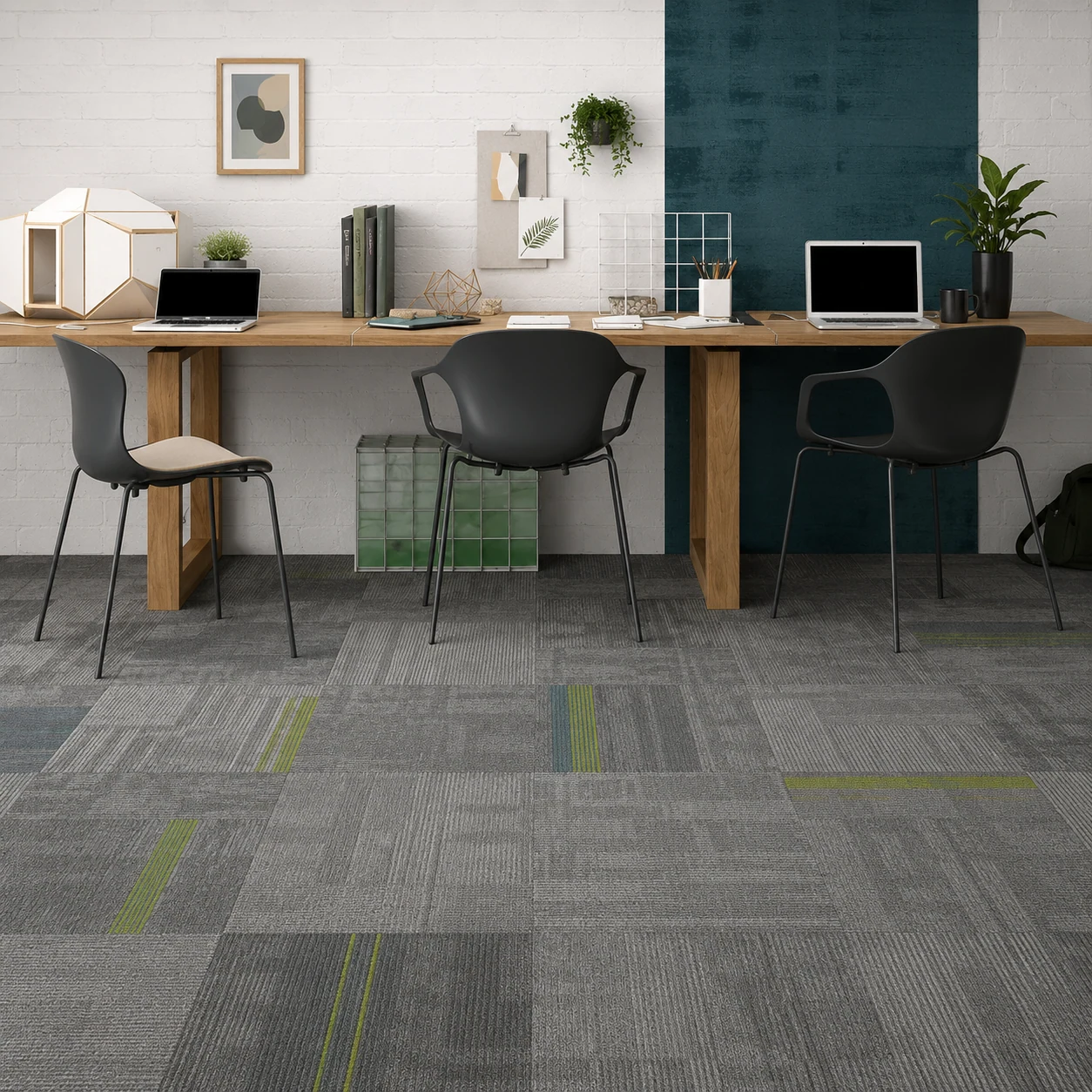
Browse the Full Range