
Custom Wool Rugs for Home Décor Brands: From Prototype to Wholesale Order
To turn a custom wool rug into a wholesale collection, define the size and color range first, then approve a prototype against a written specification. Confirm the actual fiber composition, construction, sculpted texture, edge finish and backing. Link every order variant to an approved reference so that a successful sample can guide the full assortment.
Pain Point Addressed
Plan a custom wool rug range with size and color matrices, prototype approvals, sculpted texture, edges and backing before confirming a wholesale order.
Buyer planning overview
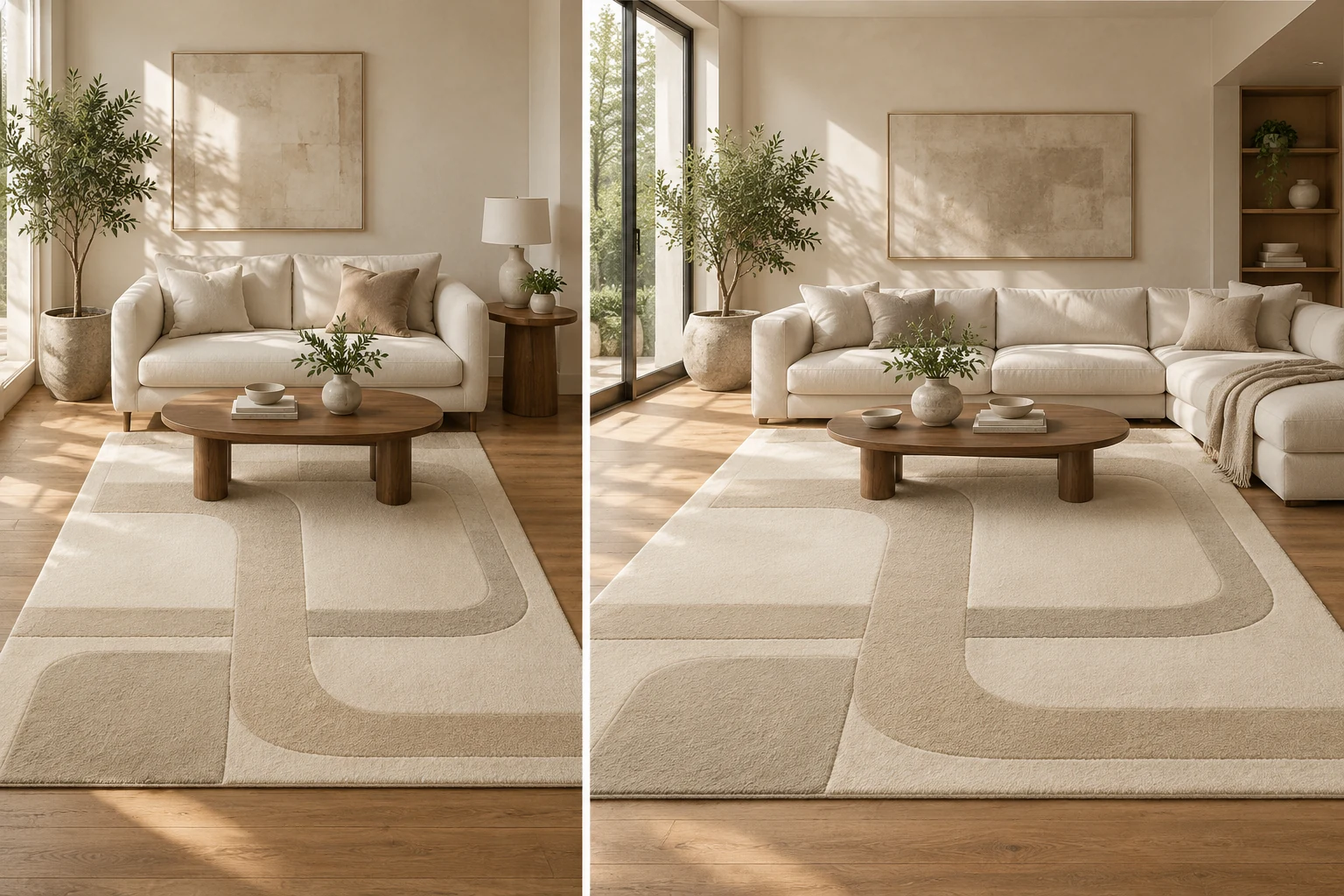
For home décor brands, furniture showrooms and rug distributors, the challenge extends beyond choosing an attractive design. The same concept needs to work in different dimensions, remain recognizable across colorways and arrive with an identification system the receiving team can use.
Give the collection a defined use and customer
Begin with the spaces the range is intended to serve: residential living rooms, designer-led interiors, furniture display settings or another clearly described application. This gives specification review a clear context.
State whether the rugs will be sold as standalone products or coordinated with a furniture collection. A rug developed around one showroom seating group may need different proportions for a broader retail range. Share the intended furniture relationships and circulation areas rather than describing every size as simply “large.”
The VCARPETS custom sculpted wool rug is a relevant product reference for this discussion. Although its name includes “lobby,” the page also covers villas, serviced residences, showrooms and rug distributors. It describes a separate decorative area rug with custom dimensions, colors and pattern-scale review. Suitability and final specification still need confirmation for the intended use.
Build the size and color matrix before sampling
List the proposed finished dimensions and quantities by colorway. Give every variant a unique code, even if several use the same underlying design. Use one measurement unit throughout the brief and state which dimension is length and which is width.
Select a representative prototype size. Ask whether another size or detail sample is needed to resolve decisions that the first prototype cannot cover.
For color, define a physical reference or another agreed approval method. A screen image can communicate a direction, but it should not become the sole production reference by accident. Record the approved reference, date and viewing conditions used for the review. If a later color changes, give it a new revision instead of silently replacing the original reference.
Decide how the sculpted pattern changes with size
Scaling a geometric rug is a design choice. A larger format can use wider bands, more repetitions or a larger central field. Those alternatives create different relationships with the rug's edge and with the furniture above it.
Prepare a scaled drawing for each proposed size. Mark the pattern center, border and important sculpted details. Compare the drawings together so that the range feels related while each size has an intentional composition.
For a concentric-square concept, check how the design resolves at the shorter sides of a rectangular rug. Simply enlarging one reference image may change the proportions in an unintended way. Ask the supplier to review feasibility, then approve the size-specific drawings that will guide sampling and production.
Write the material and construction specification precisely
“Wool rug” does not by itself establish the full fiber composition. Request the exact proposed composition and distinguish the visible pile material from backing and other components where relevant. Confirm the production construction instead of inferring it from the rug's appearance.
Describe the intended pile profile and sculpted effect, then agree how those features will be represented in the sample and specification. Ask the supplier to identify which details can be controlled consistently and how proposed tolerances will be documented. Avoid inventing a universal dimensional or texture tolerance before the actual construction is reviewed.
The edge finish and backing deserve their own entries. Review the border appearance, corners, reverse side and any additional underlay recommendation for the intended use. Review these details beyond the face photograph.
Request care guidance for the selected construction. If the brand needs product labeling, special packaging or documentation for a particular market, list those requirements for confirmation. Do not assume that a custom rug program automatically includes private-label services or any particular certification.
Use a prototype approval worksheet
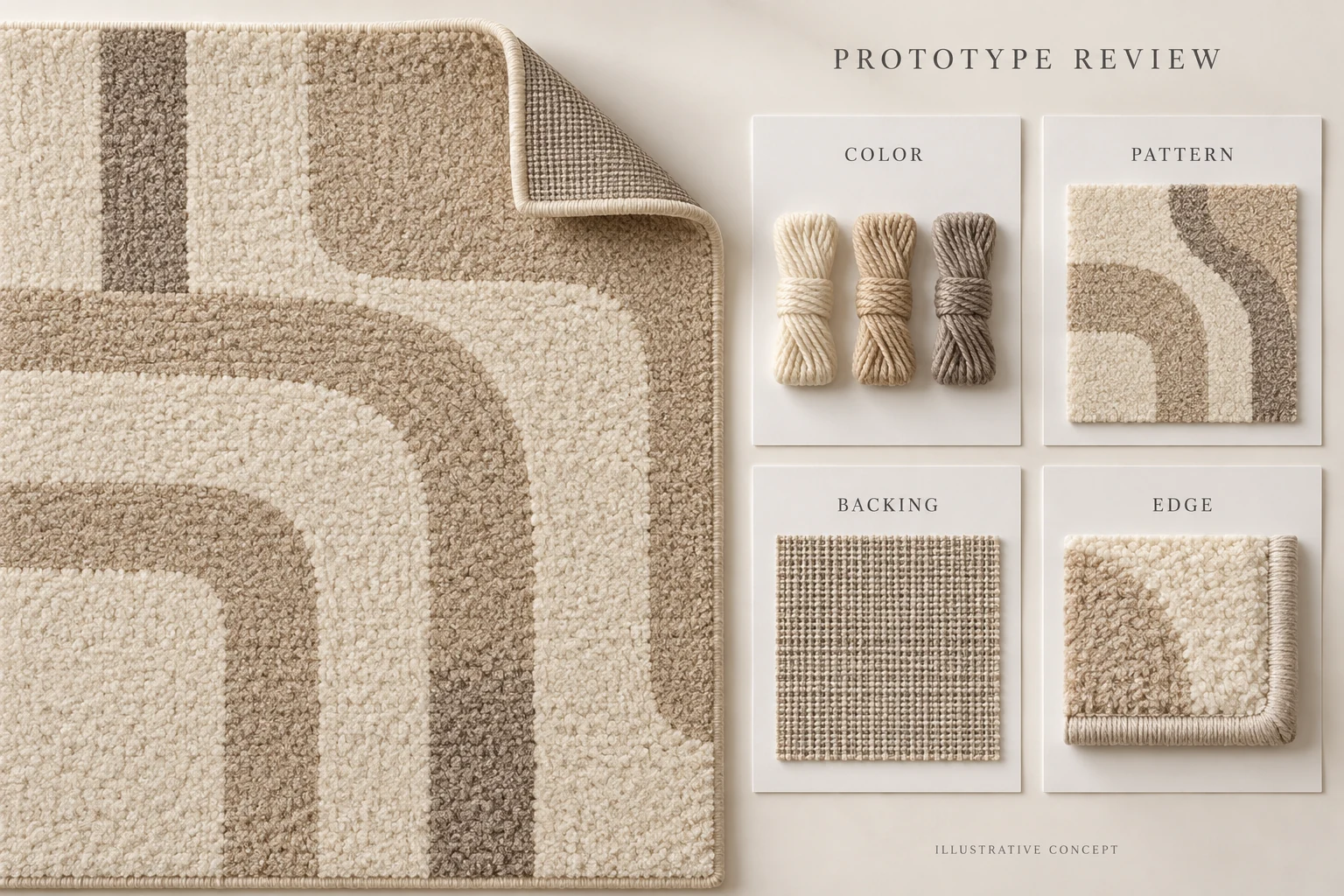
A prototype review should produce clear outcomes: approved, approved subject to listed changes, or revise and resubmit. Identify which changes require a new sample and which can be checked through an agreed alternative record.
| Review item | Approval record | Question to close |
|---|---|---|
| Variant identity | Design, size, color and revision code | Is this the correct reference for the range? |
| Finished dimensions | Measurement method and agreed tolerance | What dimensions will acceptance use? |
| Color | Approved physical reference or agreed method | Which reference controls production? |
| Pattern scale | Size-specific artwork revision | Are center, borders and proportions approved? |
| Sculpted texture | Profile description and approved sample | Is the depth and definition acceptable? |
| Materials | Confirmed fiber composition and construction | Does the specification match the approved rug? |
| Edge and backing | Detail approval and specification | Are corners, reverse and finishing resolved? |
| Packing and identification | Confirmed packing and variant-label plan | Can receiving distinguish every ordered variant? |
Keep photographs with the review record, including the full face, edge, corners and reverse. Note which physical sample is retained as the reference and who holds it. Photographs help communication but should not silently replace the approved physical or written reference.
Convert the approved prototype into order lines
The wholesale order should list each variant separately, with its finished dimensions, color reference, design revision and quantity. Keep prototype quantities distinguishable from saleable bulk quantities so there is no uncertainty over what the order total includes.
Attach the approved specification and the final size matrix. If one prototype is being used to approve several sizes, state exactly what it approves and which size-specific details rely on drawings or additional review. A single sample should not leave the treatment of every other size implicit.
Agree the packing method, package identification and any requested assortment grouping. Make variant identification practical for receiving. Ask the supplier to confirm what can be provided, including any labeling or packaging requirements that affect quotation.
Plan repeat orders while the references are current
Save the final specification, approved sample reference and variant codes where future buyers can retrieve them. Record substitutions and revisions explicitly. If a later order changes the yarn, backing, dimensions or finishing, ask whether fresh approval is needed.
Discuss repeat-order availability and production planning with the supplier rather than assuming indefinite continuity. Retained references support comparison, but they do not justify a promise of identical appearance across every future batch. A clear approval process gives both parties a practical basis for reviewing a repeat order.
Frequently asked questions
Can a home décor brand order custom rug sizes?
Custom dimensions can be reviewed for the VCARPETS sculpted rug program. Provide the finished sizes, intended use and quantities so feasibility and the specification can be confirmed.
Does “wool rug” mean the product is 100% wool?
No. Confirm the exact fiber composition for the selected product. Also identify the construction and backing rather than inferring them from the product name.
Should every size use the same scaled pattern?
That depends on the design. Review size-specific drawings to decide whether band widths, border proportions or the number of repeated forms should change.
Is one prototype enough for a collection?
It may be enough for some shared details, but it does not automatically resolve every size and color. Agree which variants and features need separate review before approving the range.
Are branded labels and packaging included?
Treat them as requirements to discuss. Ask the supplier to confirm availability, artwork requirements, quantities and commercial implications before including them in the order.
Discuss your custom wool rug range
Use the VCARPETS project inquiry form to outline your intended use, size range, colorways, quantities and destination. Add the prototype requirements in the message, or email drawings and references to sales@vcarpets.com. Request a written FOB Tianjin Port quotation with confirmed composition, construction, sample arrangements, packing and production timing for the proposed range.
Turn This Guide Into a Quote
Send Your Project Requirements After Reading This Guide
If this topic matches your project, send the carpet application, estimated area, destination, and required date. VCARPETS can recommend the related product path and reply with sample, MOQ, lead time, and quotation details.
Continue Your Specification
Related Products
Browse the Full Range