
After-Hours Carpet Tile Installation: Compare Office Bids
Separate removal, preparation, furniture moves, repeat visits and after-hours conditions before comparing local installation offers.
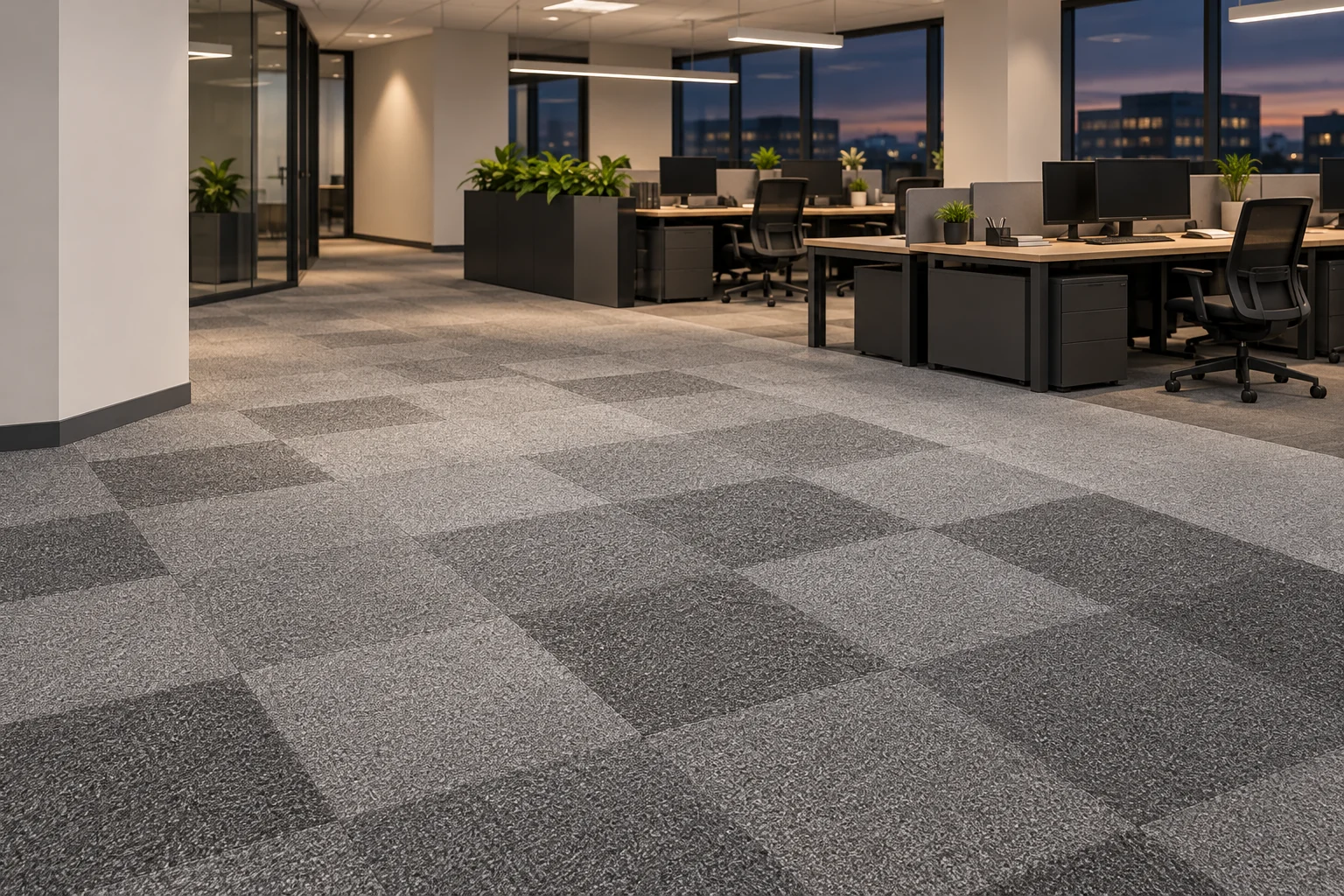
Pain Point Addressed
Compare after-hours office carpet tile installation bids by removal, preparation, furniture moves, mobilization, access and return-to-use responsibilities.
Quick answer
For an occupied office, compare the scope behind the installation price before comparing the rate. Ask each bidder to separate removal, substrate preparation, furniture moves, installation, repeat mobilizations and after-hours conditions. Agree who releases each work zone and who authorizes its return to use. Two prices per square metre are not comparable if one assumes an empty, ready floor and the other includes clearing and restoring an operating workplace.
This guide focuses on installation-bid scope, not a national labour-price benchmark or a general argument for modular carpet.
Why one area rate can hide different jobs
A March 2026 flooring discussion describes an occupied commercial project with separate charges for removal, scraping, preparation, new tile installation, wall base and repeated visits, plus an after-hours adjustment. It is a useful example of the questions a contractor faces. The poster's rates are a single project proposal, not market averages, recommended prices or a VCARPETS quotation.
The procurement lesson is straightforward: give bidders the same description of the work. A low installation-only rate may exclude most of the activities that determine the actual project spend. Conversely, a higher combined rate may include tasks another bidder has left as provisional extras.
Issue one shared site and phasing brief
Provide a drawing showing net floor areas, rooms, access routes and proposed phases. Identify which zones must remain occupied and which can be fully cleared. State whether the programme requires evening work, weekends or several separate visits; do not use “after hours” without defining the permitted working window.
Ask the building team to confirm loading access, lift reservations, security entry, material storage, waste routes and any noisy-work restrictions. Record who coordinates IT equipment and furniture. A floor installer should not have to infer whether workstation disconnection is included.
Separate the target completion date from the actual time available on the floor. Security sign-in, unloading, moving furniture and end-of-shift clearing can all occupy part of the access window. Invite bidders to state their assumed productive time and crew arrangement rather than promising an unsupported installation rate.
Use a common bid breakdown

Request quantities and units for each line, with inclusions and exclusions beside the price. Mark an item “included” or “not required” where appropriate; an empty cell is not a reliable agreement.
| Bid item | Define the scope before comparison | Ask the bidder to state |
|---|---|---|
| Existing floor removal | Tile removal, packaging and disposal route | Area basis, disposal responsibility and exclusions |
| Adhesive removal | Existing adhesive condition and allowed method | Included work and unknown-condition allowance |
| Substrate preparation | Surveyed condition and agreed preparation scope | Testing, repairs and approval process for additional work |
| Furniture and equipment | Items moved, disconnected, stored and reinstated | Responsible team and number of moves |
| New tile installation | Approved product, fixing system and layout | Installation scope and material inclusions |
| Perimeters and transitions | Wall base, doorways and adjacent surfaces | Quantities, supply responsibility and finishing scope |
| Mobilization | Planned number of separate visits | Charge per visit and rebooking conditions |
| After-hours working | Defined access windows and building rules | Whether premium is included or separately applied |
| Handover | Cleaning, inspection and return-to-use coordination | Completion evidence and unresolved-item process |
For the wider material and operating-cost discussion, see the commercial carpet tile total-cost guide. Keep this installation comparison attached to, rather than hidden inside, that overall budget.
Treat substrate uncertainty as an explicit decision point
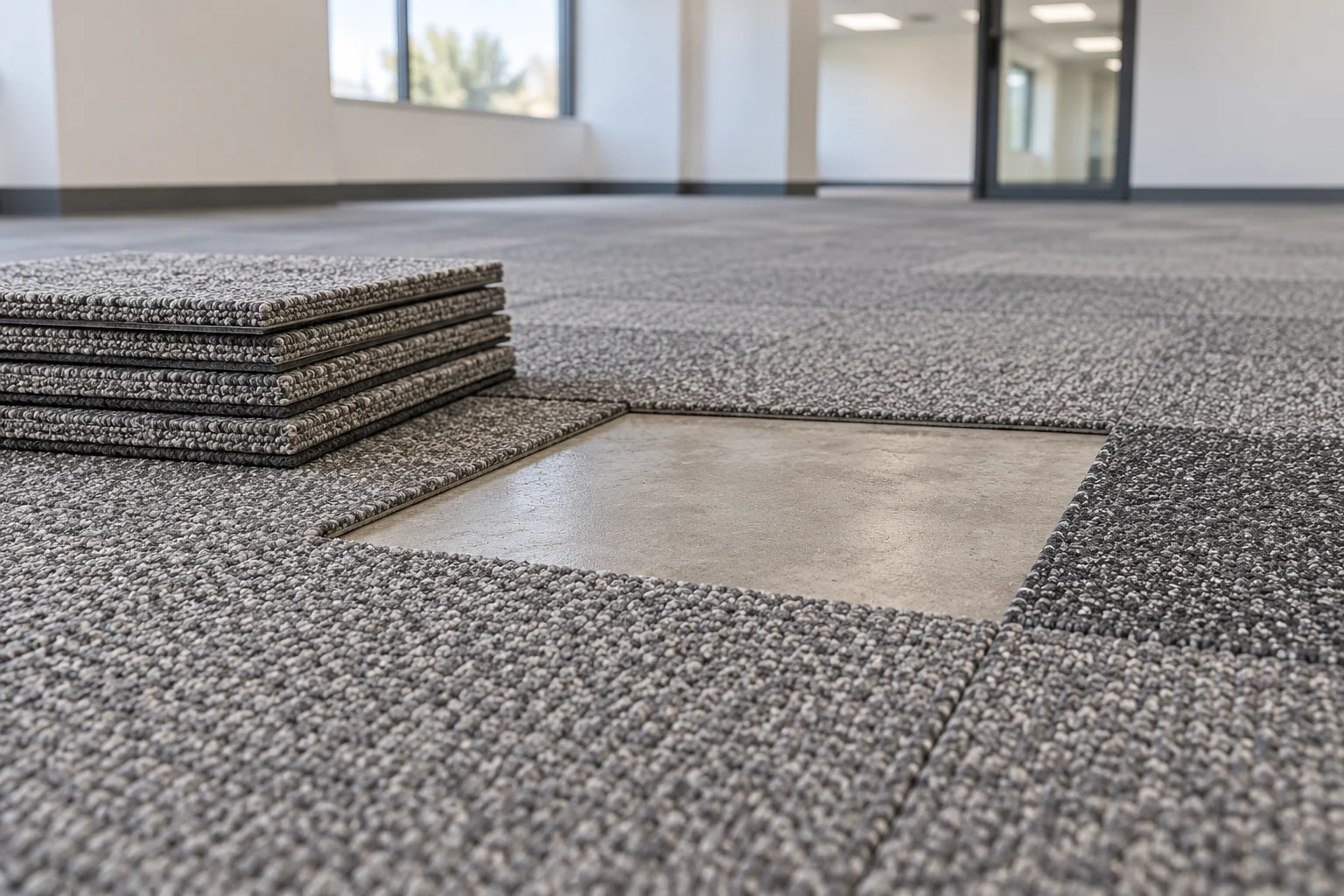
The existing carpet can conceal conditions that affect preparation. Agree what can be surveyed before tender, what remains unknown and what evidence is required before an additional charge is approved. A provisional allowance should say what it covers and how the final amount will be established.
Do not let a deadline substitute for technical readiness. The Carpet and Rug Institute's installation standards identify CRI 104 as the commercial installation reference and provide guidance addressing installation planning and preparation. Obtain the selected carpet and installation-system instructions as well; the applicable requirements must be checked for the actual project.
The adhesive and subfloor compatibility guide supports that technical review. This article does not set universal moisture limits, prescribe an adhesive or authorize installation over an unsuitable substrate.
Keep the after-hours premium from being counted twice
Ask whether evening or weekend labour is already incorporated in each rate or added to a defined subtotal. If a percentage is proposed, identify exactly which lines it applies to. Do not assume a premium applies to materials, freight, disposal or other separately priced items.
Likewise, distinguish a planned visit from a return caused by a site-access failure, an approved scope change or unfinished prerequisite work. Record who can authorize rescheduling and what notice is required. These are terms to negotiate for the project, not automatic charges the buyer should accept without review.
A short clarification meeting is often more useful than another round of headline discounts. Issue any agreed changes to all shortlisted bidders so the revised offers still address the same scope.
Define what “ready for staff” actually means

Finishing the last tile is not the same decision as reopening the zone. Agree the required inspection, cleaning, furniture reinstatement and release checks in advance. Follow the applicable installation-system instructions for traffic, furniture and other return-to-use conditions rather than assuming everything can be rolled back immediately.
Maintain a zone record showing the work completed, outstanding items, release status and responsible sign-off. Keep circulation and emergency arrangements under the building team's control throughout the works. Do not describe an illustrative phasing drawing as an approved safety plan.
Before the final phase, check that sufficient approved material remains for the work, agreed cutting allowance and separately identified spares. A supply shortfall discovered during a booked night shift can create a different commercial problem from a slow installation.
Build a quote-ready carpet package
Explore commercial carpet tiles, then send VCARPETS the intended application, area, preferred construction, destination and required supply date. Include the approved phase quantities and sample requirements. Keep the local installation bid and its site responsibilities separate so material procurement and contractor pricing can be reviewed on a clear basis.
Buyer Questions
Frequently Asked Questions
Is night installation always more expensive?
Not necessarily in the same way on every project. Access, crew arrangements, visit count and included services affect the offer. Compare the written project scope rather than importing a premium from another location.
Should preparation be included in one fixed rate?
It may be, when the scope is sufficiently defined. Where conditions are uncertain, agree a survey, allowance or documented change process instead of treating an undefined promise as a fixed specification.
Does a carpet supply quote include local installation?
Do not assume it does. Confirm supply, freight, duties, site handling and installation responsibilities separately in the actual quotation.
Turn This Guide Into a Quote
Send Your Project Requirements After Reading This Guide
If this topic matches your project, send the carpet application, estimated area, destination, and required date. VCARPETS can recommend the related product path and reply with sample, MOQ, lead time, and quotation details.
Email: sales@vcarpets.com
Continue Your Specification
Related Products

Browse the Full Range